
Digital marketing is the use of digital platforms, technologies, and online strategies to promote businesses, products, services, and personal brands. In today’s highly connected world, having a strong digital presence is essential for reaching potential customers and building a successful brand. Digital marketing allows businesses to connect with their target audience through channels such as search engines, social media, websites, email, online advertising, and content marketing.
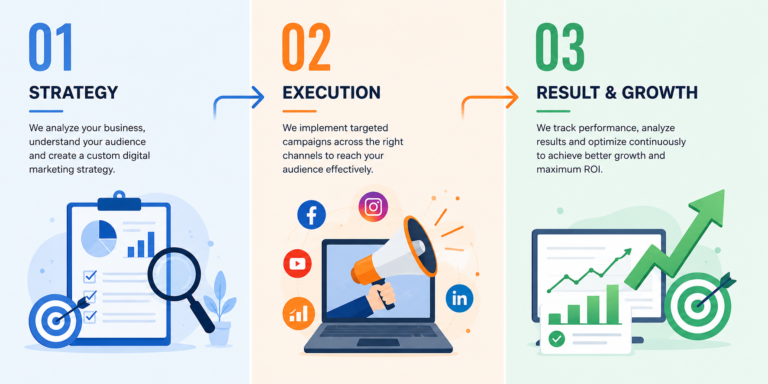
A successful digital marketing strategy begins with understanding the business, its objectives, target audience, competitors, and market. Every business has a different audience and different goals, so marketing strategies should be customized accordingly. Understanding customer needs, interests, online behavior, and search intent helps create campaigns and content that are more relevant and effective.
Search Engine Optimization (SEO) helps businesses improve their organic visibility on search engines and attract people who are actively searching for relevant products, services, or information. Through keyword research, high-quality content, technical optimization, on-page SEO, and other strategies, a website can build stronger search visibility and generate consistent organic traffic over time.
Social media marketing is another important part of digital marketing. Platforms such as Instagram, Facebook, YouTube, TikTok, LinkedIn, and Pinterest provide businesses with opportunities to build brand awareness, engage with their audience, showcase their products or services, and create a strong online community. Consistent and valuable content can help brands increase engagement, build trust, and develop meaningful relationships with their customers.
Search Engine Marketing (SEM) and paid advertising help businesses reach highly targeted audiences through online advertisements. Paid campaigns can be used to generate website traffic, leads, sales, app installations, or brand awareness. By carefully selecting keywords, audiences, ad creatives, budgets, and campaign objectives, businesses can make their advertising more targeted and measurable.
Content marketing focuses on creating useful, relevant, and valuable content that attracts and engages a specific audience. Blog articles, videos, Reels, social media posts, guides, infographics, email content, and other forms of content can educate audiences, answer their questions, demonstrate expertise, and guide potential customers through the buying journey.
A strong website is also an important part of digital marketing. A website acts as the central online presence of a business and provides visitors with information about its products, services, brand, and contact options. A professional, responsive, user-friendly, and SEO-friendly website can improve credibility, provide a better user experience, and help convert visitors into leads or customers.
Data and analytics play a major role in modern digital marketing. Performance can be measured through metrics such as website traffic, engagement, reach, clicks, conversions, leads, customer acquisition cost, and return on investment. Analyzing these results helps marketers understand what is working, identify areas for improvement, and make informed decisions based on actual performance rather than assumptions.
Digital marketing also allows businesses to communicate directly with their customers. Through social media messages, email marketing, comments, online communities, and other digital channels, brands can respond to questions, understand customer feedback, and build stronger relationships. This direct communication can improve customer experience and contribute to long-term brand loyalty.
One of the biggest advantages of digital marketing is its flexibility and measurability. Unlike many traditional marketing methods, digital campaigns can be monitored, tested, adjusted, and optimized based on real-time performance. Businesses can experiment with different content, audiences, platforms, and strategies to discover what delivers the best results within their available budget.
Ultimately, digital marketing is more than simply promoting a business online. It is a complete approach that combines SEO, social media marketing, SEM, content marketing, website optimization, paid advertising, analytics, and audience engagement to achieve specific business goals. With the right strategy, creativity, consistent execution, and data-driven optimization, digital marketing can help businesses increase visibility, reach the right audience, generate quality leads, build strong brands, and achieve sustainable growth in the digital world.
Why Digital Marketing Is Important?
Digital marketing is important because it helps businesses reach their target audience where they spend a significant amount of their time—online. In today’s digital world, customers use search engines, social media, websites, and online platforms to discover brands, research products, compare services, and make purchasing decisions. A strong digital marketing presence allows businesses to stay visible, connect with potential customers, and remain competitive in an increasingly digital marketplace.
One of the biggest advantages of digital marketing is its ability to reach the right audience with greater precision. Businesses can target people based on factors such as location, interests, demographics, search behavior, and online activity. This makes marketing campaigns more relevant and helps businesses communicate their message to people who are more likely to be interested in their products or services.
Digital marketing also helps businesses build brand awareness and credibility. Consistent content, professional social media presence, valuable information, and a well-designed website can help establish a strong and recognizable brand identity. By regularly engaging with their audience and providing useful content, businesses can build trust and create long-term relationships with potential and existing customers.
Another important benefit is that digital marketing is measurable. Businesses can track website traffic, social media engagement, ad performance, leads, conversions, and other key metrics. These insights help marketers understand what is working and what needs improvement. Instead of relying only on assumptions, businesses can use real data to make better marketing decisions and continuously optimize their strategies.
Digital marketing can also be more flexible and cost-effective than many traditional marketing methods. Businesses can choose their budgets, target specific audiences, test different campaigns, and adjust their strategies based on performance. Whether a business is a small startup or an established company, digital marketing provides opportunities to reach potential customers and grow according to its goals and resources.
Ultimately, digital marketing is important because it connects businesses with the right people at the right time through the right digital channels. By combining SEO, social media marketing, content marketing, SEM, paid advertising, website optimization, and analytics, businesses can increase visibility, attract quality leads, improve customer relationships, and achieve sustainable long-term growth.
Advantages of Digital Marketing
Digital marketing offers several advantages for businesses in today’s competitive online environment. It helps businesses reach a wider and more targeted audience, build brand awareness, generate leads, and increase sales. Compared with many traditional marketing methods, digital campaigns can be more flexible and cost-effective, allowing businesses to choose their budget and target specific audiences. Another major advantage is that results can be measured through data such as website traffic, engagement, clicks, leads, conversions, and return on investment. Digital marketing also enables direct communication with customers through social media, email, websites, and other online channels, helping businesses build stronger relationships and customer loyalty.
Disadvantages of Digital Marketing
Despite its many benefits, digital marketing also has some challenges. It requires consistent content creation, regular monitoring, and continuous optimization, which can be time-consuming. Businesses face high competition online, making it difficult to capture and retain audience attention. Changes in search engine and social media algorithms can also affect organic reach and campaign performance. Negative reviews, comments, or poorly managed content can potentially damage a brand’s reputation. Paid advertising may become expensive if campaigns are not properly targeted and optimized. In addition, privacy, security, fake accounts, and changing digital trends require businesses to be careful and adaptable when managing their online presence.