
Search Engine Optimization (SEO) is the process of improving a website’s visibility on search engines like Google. The main goal of SEO is to help a website appear higher in relevant search results when potential customers search for products, services, or information related to the business. A well-planned SEO strategy can increase organic traffic, improve online visibility, and help businesses reach the right audience without depending entirely on paid advertising.
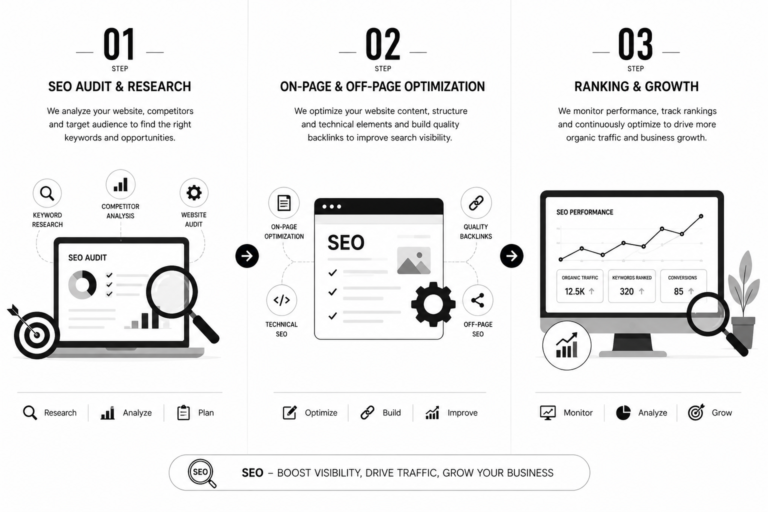
SEO involves several important areas, including keyword research, on-page optimization, technical SEO, content optimization, link building, and performance analysis. Keyword research helps identify the terms and phrases that potential customers are searching for. These keywords can then be strategically used in website content, headings, titles, meta descriptions, URLs, and other important areas to make the website more relevant to search engines and users.
On-page SEO focuses on optimizing the content and structure of individual web pages. This includes creating useful and relevant content, optimizing title tags and meta descriptions, using proper heading structures, improving internal linking, and making content easy to understand. High-quality content is especially important because search engines aim to provide users with the most helpful and relevant information for their searches.
Technical SEO focuses on the technical performance and structure of a website. Website speed, mobile responsiveness, crawlability, indexing, site architecture, broken links, and security can all influence how effectively search engines understand and rank a website. A technically optimized website also provides visitors with a better browsing experience, which can contribute to stronger overall website performance.
Local SEO is particularly valuable for businesses that serve customers in a specific location. Optimizing a business for local searches can help it appear when people search for nearby services or products. This can involve optimizing business information, creating location-focused content, managing online listings, and building a strong local online presence.
SEO is not an instant marketing strategy; it is a long-term process that requires continuous optimization and analysis. Search engine algorithms, competitors, customer behavior, and search trends are constantly changing. By regularly monitoring rankings, organic traffic, user behavior, and other performance metrics, businesses can identify opportunities and continuously improve their SEO strategy.
A strong SEO strategy can provide businesses with consistent organic traffic, better brand visibility, increased credibility, and more opportunities to generate leads and conversions. Unlike short-term promotional campaigns, effective SEO can continue to deliver value over time by helping a website establish a strong and sustainable presence in search engine results.
Why SEO Matters
For businesses competing in a crowded digital environment, simply having a website is not enough. Your potential customers need to be able to find you when they search online. SEO helps bridge this gap by connecting your website with people who are already looking for what you offer. With the right combination of strategy, quality content, technical optimization, and continuous analysis, SEO can turn a website into a powerful source of organic growth.
Advantages of SEO
SEO offers many benefits for businesses by improving their visibility in search engine results. It helps increase organic traffic and allows businesses to reach people who are actively searching for their products or services. SEO is also cost-effective compared to paid advertising and can provide long-term results when properly maintained. It helps build brand credibility and trust, improves website user experience, generates quality leads, and gives businesses a competitive advantage in the digital marketplace.
Disadvantages of SEO
SEO also has some disadvantages that businesses need to consider. One of the main drawbacks is that it takes time to achieve noticeable results and requires consistent effort and patience. Search engine algorithm updates can affect website rankings, while high competition can make it difficult to rank for popular keywords. SEO also requires regular content creation, technical optimization, monitoring, and maintenance. Additionally, there is no guarantee of achieving a specific ranking position, making SEO a long-term strategy rather than an instant solution.