
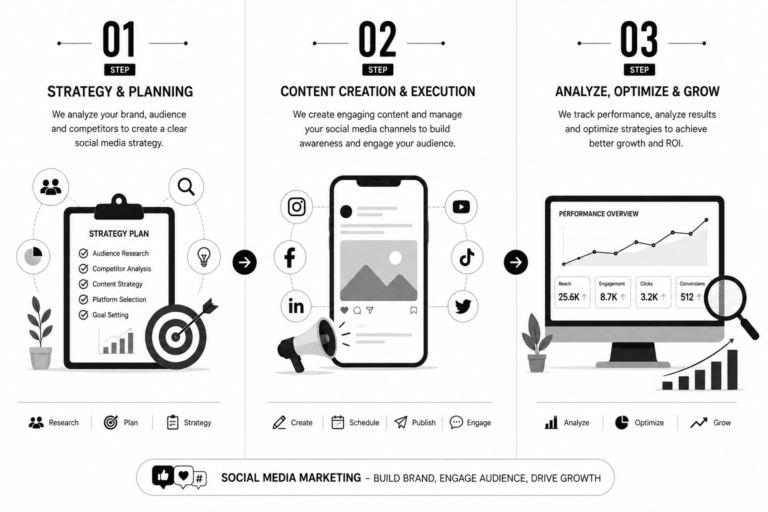
Social Media Marketing (SMM) is the process of using social media platforms to promote a business, build brand awareness, connect with customers, and achieve marketing goals. Platforms such as Instagram, Facebook, YouTube, LinkedIn, TikTok, and Pinterest provide businesses with powerful opportunities to reach a large and targeted audience. With the right strategy, social media can help a brand become more visible, recognizable, and connected with its customers.
One of the major benefits of social media marketing is its ability to create direct communication between a business and its audience. Unlike traditional marketing methods, social media allows customers to interact with brands through comments, messages, shares, likes, and other forms of engagement. This two-way communication helps businesses understand customer needs, build trust, and develop stronger relationships with their audience.
Content plays an important role in successful social media marketing. Businesses can use different types of content such as reels, short-form videos, images, carousels, stories, educational posts, testimonials, and promotional content to communicate their message. Creating content that is useful, entertaining, informative, or emotionally engaging can help attract attention and encourage users to interact with the brand.
A strong social media strategy begins with understanding the target audience. Identifying the audience’s interests, behavior, needs, location, age group, and online habits helps businesses create more relevant content. Choosing the right platforms is also important because every social media platform has a different audience and content style. A strategy that works well on Instagram may not necessarily produce the same results on LinkedIn or YouTube.
Consistency is another important factor in social media marketing. Regularly publishing quality content helps businesses maintain visibility and stay connected with their audience. However, consistency does not simply mean posting every day; it means maintaining a clear content strategy, brand identity, tone, and visual style. A well-planned content calendar can help businesses organize their posts and maintain a consistent online presence.
Social media marketing can also support lead generation and sales. Through engaging content, calls-to-action, promotional campaigns, product showcases, and direct messaging, businesses can guide potential customers from social media to their websites, landing pages, or contact channels. Social media platforms can therefore become an important part of the customer journey, from discovering a brand to making a purchase.
Paid social media advertising can further increase the reach of a business. Platforms such as Meta allow businesses to target audiences based on factors such as interests, demographics, behavior, and location. Paid campaigns can be used for brand awareness, website traffic, lead generation, conversions, product promotion, and remarketing. Combining paid advertising with strong organic content can create a more effective overall social media strategy.
Community management is another essential part of social media marketing. Responding to comments, answering messages, engaging with followers, and building conversations can make a brand feel more approachable and trustworthy. Active community engagement can also encourage customer loyalty and create a stronger relationship between the brand and its audience.
Influencer marketing and user-generated content can also contribute to social media growth. Collaborating with relevant creators can help businesses introduce their products or services to new audiences. User-generated content, reviews, testimonials, and customer experiences can provide social proof and help potential customers feel more confident about a brand.
Analytics and performance tracking are essential for improving social media results. Important metrics such as reach, impressions, engagement rate, follower growth, website clicks, leads, conversions, and video views can help businesses understand what is working and what needs improvement. By analyzing these results regularly, marketers can optimize their content strategy and make better data-driven decisions.
Overall, Social Media Marketing is more than simply posting content on social platforms. It combines strategy, creativity, content creation, audience engagement, advertising, community building, and performance analysis to help businesses achieve their marketing objectives. With a consistent and well-planned approach, social media can become a powerful tool for building brand awareness, connecting with customers, generating leads, and achieving long-term business growth.
Why Social Media Marketing is Important?
Social Media Marketing is important because it helps businesses build a strong online presence and connect directly with their target audience. With millions of people using social media every day, platforms such as Instagram, Facebook, YouTube, LinkedIn, and TikTok provide businesses with valuable opportunities to reach potential customers. A strong social media presence can increase brand awareness, improve visibility, and help a business stay connected with its audience.
Social media marketing also helps businesses build trust and meaningful relationships with customers. Through regular content, comments, messages, stories, and community engagement, brands can communicate with their audience and understand their needs and preferences. This direct interaction makes the brand more approachable and can encourage customer loyalty.
Another important advantage is its ability to generate traffic, leads, and sales. Engaging content and targeted campaigns can encourage users to visit a website, explore products or services, contact the business, or make a purchase. Businesses can also use social media advertising to reach specific audiences based on their interests, location, demographics, and online behavior.
Social media marketing is also valuable because its performance can be measured and analyzed. Metrics such as reach, impressions, engagement, follower growth, clicks, leads, and conversions help businesses understand the effectiveness of their marketing efforts. By analyzing these results, marketers can improve their strategies, create better content, and make data-driven decisions.
Overall, social media marketing has become an essential part of modern digital marketing. It helps businesses increase visibility, build credibility, engage with customers, generate leads, and support long-term growth. A consistent and well-planned social media strategy can help a brand stand out from competitors and create a strong, lasting connection with its audience.
Advantages of Social Media Marketing
Social Media Marketing offers many advantages for businesses by helping them reach a large and targeted audience at a relatively low cost. It increases brand awareness, improves online visibility, and allows businesses to communicate directly with their customers. Social media also provides opportunities to generate leads, drive website traffic, increase sales, and build long-term customer relationships. Businesses can use creative content such as reels, videos, stories, and posts to engage their audience and create a strong brand identity. Another major advantage is that social media performance can be measured through analytics, allowing marketers to understand audience behavior and improve their strategies.
Disadvantages of Social Media Marketing
Social Media Marketing also has some disadvantages that businesses need to consider. Maintaining an active social media presence requires consistent content creation, regular engagement, and continuous effort. The high level of competition on social platforms can make it difficult for businesses to gain attention and stand out. Negative comments, reviews, or customer feedback can spread quickly and potentially affect a brand’s reputation. Social media algorithms also change frequently, which can influence organic reach and engagement. In addition, successful social media marketing requires proper planning, creativity, time, and continuous monitoring to achieve sustainable results.